Systems integrator BPPA biological infrastructure

Biological infrastructure
for palm oil mills, deployed.

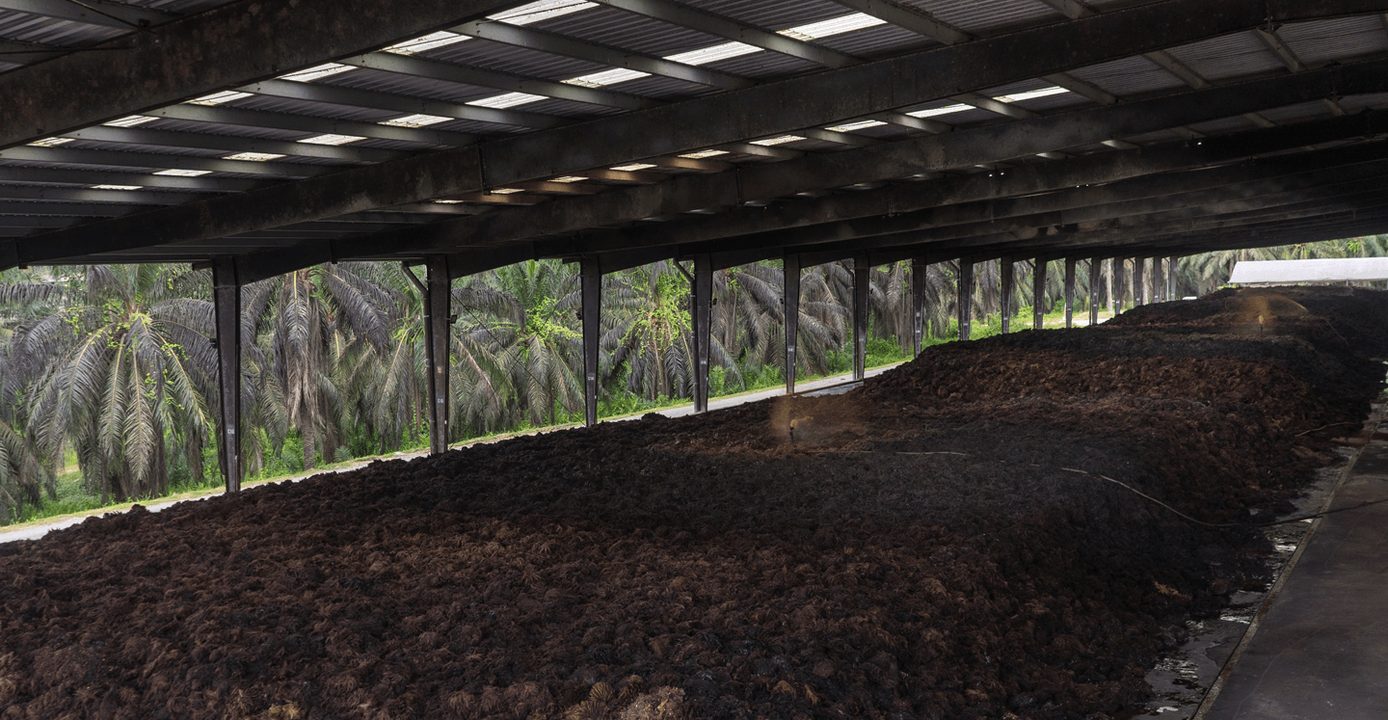
We deploy BPPA's biological substrate engineering platform at palm oil mills across Malaysia and Indonesia. Across 24 completed sites, the group has processed more than 9 million tonnes of palm oil mill biomass into Matrix.

Discover the platform
01 / 04
What we do

Palm oil milling produces two primary waste streams that quietly leak methane and money. Our system converts both into Matrix: biological fertility, returned to the soil it came from.

02 / 04

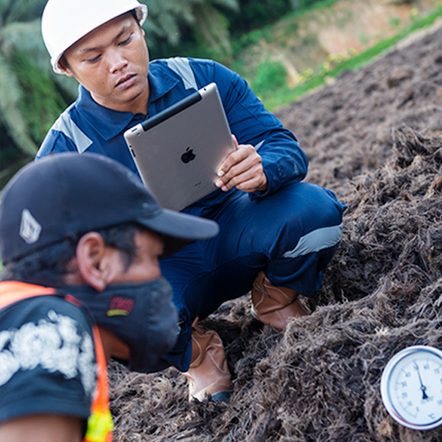
We finance the build, sit our refinery beside the mill on a fixed footprint, and operate it under a long-term service agreement. The mill's existing process line is untouched.

03 / 04

Eighteen years and twenty-four sites later, we have the operating record to deliver carbon liability removed and CAPEX absorbed at scale, across Malaysia and Indonesia.

04 / 04

Methodology shaped with Verra and Southpole. Standards set with RSPO. Science verified with FAO and university research groups across three continents. Decarbonisation at this scale runs through institutions.
Operating record
9.3M tonnes

of palm-mill biomass converted to Matrix, across twenty-four sites and eighteen years.

25Sites built
11Plantation groups
~RM1MAnnual savings · typical mill
MY · IDGeographies
GENTING PLANTATIONS· 2 SITES · 2012 MP EVANS PLC· 2 SITES · 2011 ANJ GROUP · AUSTINDO· 2 SITES · 2014 REA HOLDINGS PLC· 2 SITES · 2009 UNITED MALACCA BHD· 2 SITES · 2017 BAKRIE SUMATERA PLANTATIONS· 2 SITES · 2010 KENCANA AGRI· 1 SITE · 2009 WTK SOUTHWIND· 1 SITE · 2009 JULONG TIANJIN· 1 SITE · 2019 SAWIT KINABALU· SABAH · Q1 2026NEW KORINDO· INDONESIA · Q1 2026NEW GENTING PLANTATIONS· 2 SITES · 2012 MP EVANS PLC· 2 SITES · 2011 ANJ GROUP · AUSTINDO· 2 SITES · 2014 REA HOLDINGS PLC· 2 SITES · 2009 UNITED MALACCA BHD· 2 SITES · 2017 BAKRIE SUMATERA PLANTATIONS· 2 SITES · 2010 KENCANA AGRI· 1 SITE · 2009 WTK SOUTHWIND· 1 SITE · 2009 JULONG TIANJIN· 1 SITE · 2019 SAWIT KINABALU· SABAH · Q1 2026NEW KORINDO· INDONESIA · Q1 2026NEW
The stack

Five components. One operating system for biological waste-to-substrate conversion.

Our system. Your output.

BPPA owns the science and the technology stack. BARformula deploys it on the mill footprint, runs it continuously, and reports against contracted tonnage.

01 · PROCESS
BSE
Biological Substrate Engineering
The scientific category. Aerobic decomposition of palm oil mill biomass under engineered microbial conditions. Replaces uncontrolled lagoon-based methanogenesis with a controlled, measurable, oxygen-managed process.
02 · SYSTEM
AMR
Advanced Microbial Refinery
The engineered facility that executes BSE. Sized to mill throughput. Standard footprint 180m × 60m. Currently in Gen 3 deployment at the Lumadan reference site, Sabah.
03 · CARTRIDGE
BARcode
Microbial bioalgorithms
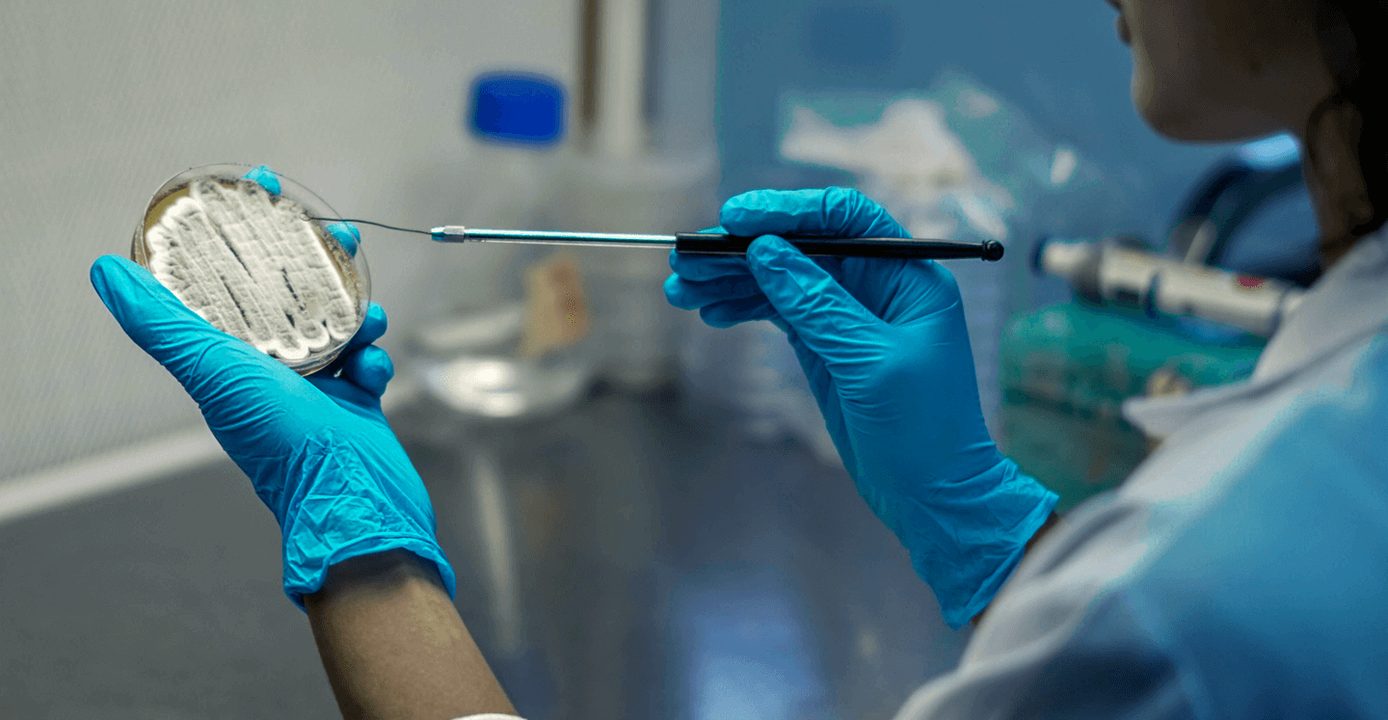
BPPA's proprietary microbial bioalgorithm system, loaded into cartridges via the on-site Encoder console and selected per site soil profile. Developed from nearly two decades of field-calibrated microbial work.
04 · OUTPUT
Matrix
Engineered biofertiliser
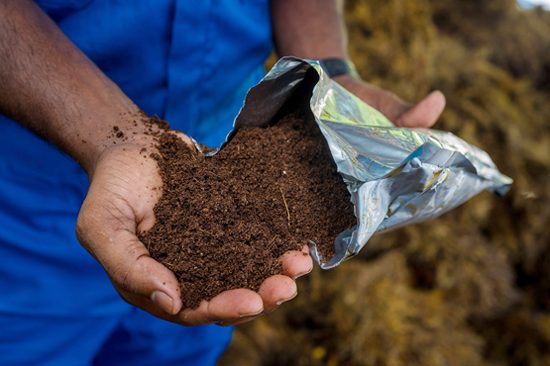
EFB-based biofertiliser carrying the microbial payload back to the plantation. Four tiers: Core, Plus, Pro, Max. Documented to displace 20–40% of inorganic fertiliser at sustained application rates by improving nutrient cycling, microbial activity, and soil function. Site-specific performance is validated during deployment.
05 · SOFTWARE
Mission Control
Telemetry & MRV
Remote orchestration, data capture, and reporting layer across deployed sites. Generates the MRV evidence base being prepared for future registry engagement.

02 · AMR

The Advanced Microbial Refinery is a closed-loop biomass conversion facility.

On your land. On our balance sheet.

From two primary waste streams to one substrate.

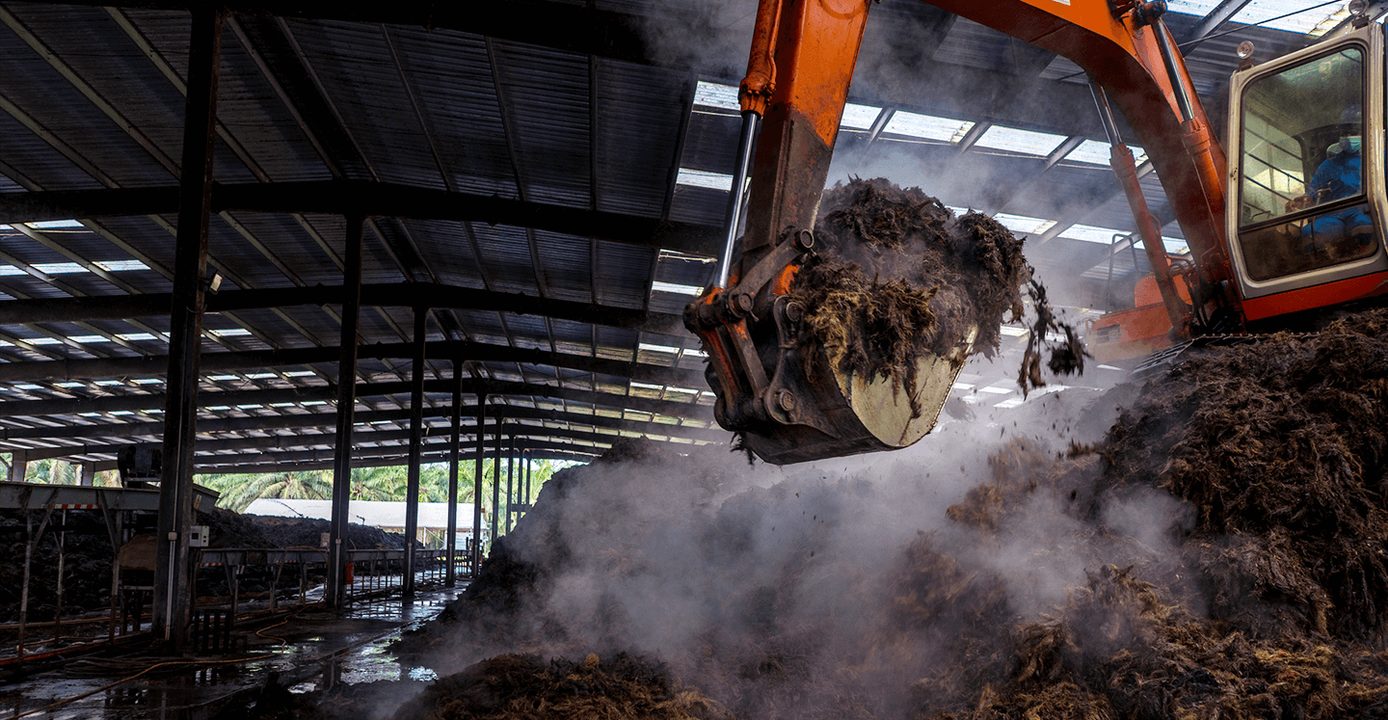
The AMR ingests the two material streams every palm oil mill already produces: empty fruit bunches (EFB) and palm oil mill effluent (POME). Under engineered microbial conditions and aerobic management, these convert into Matrix over a fixed 45-day cycle.

The mill's existing process line is untouched. The AMR sits beside the mill on a standard 180m × 60m footprint. BARformula finances and constructs. BARformula owns and operates for the contract term.

InputsEFB + POME
EFB utilisation100%
POME utilisationup to 60% of FFB
Cycle45 days
Footprint180m × 60m
Matrix output21% of FFB
Pond CAPEX displacement30k vs 60–100k m³
AMR · GEN 3 CYCLE · 45D · STATUS RUNNING
01 · EFB
100% util.
02 · POME
~60% / FFB
METHOD Aerobic BSE 45 days
CARTRIDGE BARcode · Tier 03 loaded
FOOTPRINT Mill-side build 180 × 60 m
TELEMETRY Mission Control live
MATRIX
18% / FFB
DEST. Plantation field cycle-on-cycle

04 · Matrix

Four tiers of Matrix. Calibrated to the site, not the catalogue.

21% of FFB, returned to your soil.

Matrix is the engineered biofertiliser that returns to the plantation as the AMR's productive output. Each tier is a different microbial enrichment, selected based on the soil profile and agronomic objectives at the site. Tier selection happens at site scoping, not at the order desk.

TIER · 01Core

Baseline EFB substrate with the foundational microbial consortium. Used at sites where the primary objective is biomass closure and methane avoidance.

  • Lignocellulose breakdown
  • Aerobic-stable consortium
  • Pathogen suppression
  • Standard NPK profile
TIER · 02Plus

Core plus site-tuned microbial enrichment. Selected when the soil profile has specific deficiencies in P, K, or trace nutrient mobilization capacity.

  • P-solubilising bacteria
  • K-mobilising consortium
  • Micronutrient release
  • Site-calibrated dosing
TIER · 04Max

Full-spectrum substrate carrying the complete BARcode Palm Oil consortium. Specified for replant programs, distressed estates, and Project Atlas-class transformations.

  • Full BARcode Palm Oil consortium
  • Volcanic mineral co-formulation
  • Endophytic mycorrhiza (AMF) root colonisation
  • Site-specific encoder profile

The science

What changes when biology runs the conversion.

Yield up. Cost down. Soil restored.

Three measurable outcomes, all field-validated across BARformula sites and corroborated in the published literature. The numbers below are not projections.

Methane intensity, by handling method WIPO Green / MPOB
m³ CH₄ / tonne FFB 40 30 20 10 0 38 Open POME pond 12 Biogas capture 9 EFB land app ~2 AMR (BSE)

Open anaerobic POME ponds vent the most methane. AMR's aerobic process avoids the anaerobic pathway entirely. Methane is roughly 28× more potent than CO₂ over a 100-year horizon.

FFB yield uplift with Matrix application CIRAD · ANJ Group · 3-year trial
% increase vs control 20 15 10 5 +4% +10% +16% Year 1 Year 2 Year 3

Matrix applied at 10 MT/Ha with average nutrient profile (0.7%N, 0.1%P, 1.1%K). Yield gains compound over multiple cycles as soil microbiome rebuilds. Source: Journal of Oil Palm Research, Vol 25(1), April 2013.

Inorganic fertiliser displacement BARformula site data
% of standard NPK input · post-AMR Standard NPK regime 100% After Matrix supplementation 60–65% 35–40% INORGANIC FERTILISER DISPLACEMENT

Documented across multiple operating sites. Translates directly to mill operating cost reduction in the order of RM1M per annum on a typical mid-sized site.

Soil C:N ratio · pre and post-Matrix Field samples · 24 months
C:N ratio · ideal 25–30:1 shown IDEAL · 25–30:1 Before 12:1 12 months 19:1 24 months 26:1

Palm oil topsoil typically presents at C:N 10–14:1, well below the 25–30:1 at which microbial nutrient cycling functions optimally. Matrix application restores the ratio over multi-year cycles.


Why this matters

Three numbers every plantation operations head should keep on the wall.

What boards need to know.

The case for biological infrastructure is not abstract. It sits in three measurable threats facing the industry today, each of which BARformula is engineered to address.

01 · TOPSOIL
30%
of arable topsoil has been lost in the last forty years.
Current global rate of loss: 24 billion tonnes per year. UN FAO projections give commercial-scale agriculture roughly sixty more harvest cycles at the present trajectory. Conventional palm oil management is a net topsoil consumer. Matrix-supplemented soils are net topsoil builders.
Source: UN FAO · Status of the World's Soil Resources
02 · METHANE
213k
tonnes CO₂e per year from one mid-sized mill on an open POME pond.
An uncontrolled-baseline mill processing 200,000 tonnes FFB per year would emit roughly 7,600 tonnes of methane annually from open anaerobic ponds. Over a 100-year horizon at GWP 28, that equals 213,000 tCO₂e per year — the same emissions footprint as 46,000 round-trip flights New York to London. This is the industry-scale problem statement; site-specific avoided emissions depend on the existing baseline (post-2021 MY mills above 270 kt FFB/yr already have mandated methane management).
Source: IPCC AR6 · MPOB POME GHG benchmarks · uncontrolled-lagoon baseline
03 · ENZYMOLOGY
35–40%
of inorganic fertiliser displaced by living microbial soil.
BARcode consortia contain microbes that produce enzymes — peroxidase, cellulase, β-glucosidase, phosphatase — that mobilise nutrients already locked in the soil. Synthetic fertilisers attempt to substitute for this chemistry by overriding rather than restoring it. Living soil restores the work. Synthetic dependency falls.
Source: Journal of Soil Biology & Biochemistry · BARformula field data

The next cycle

Three generations of planters have inherited the same playbook. The next cycle has to be different.

Carbon liability, off your books.

CARBON OBSERVATORY · MALAYSIA + INDONESIA
LIVE · UPDATED 17:42 LCL · GWP 28 · MPOB+GAPKI
95°E 145°E 10°S 7°N PEN. MALAYSIA SUMATRA · ID BORNEO SABAH · MY SARAWAK · MY KALIMANTAN · ID JAVA · ID SULAWESI · ID WEST PAPUA · ID SITE 024 · SAWIT KINABALU · Q1 2026 SITE 024 · KORINDO · Q1 2026
0
Mill deployments built
Across 11 plantation groups · MY · ID
0M tCO₂e/yr
Industry-scale uncontrolled-baseline reference. Site-specific avoided emissions are smaller and depend on the existing baseline at each mill.
Methane avoidance footprint
24 sites × ~207k tCO₂e per site capacity
0M cars
Equivalent removed from the road
US EPA: 1 car ≈ 4.6 tCO₂e/yr
0% of mills
Industry coverage to date
24 of ~1,500 mills · MY+ID
RECENTLY BUILT
SITE 024 Sawit Kinabalu · Sabah, MY Q1 2026
SITE 025 Korindo · Indonesia (West Papua) Q1 2026
SECTOR · PALM OIL · MY+ID SITES BUILT · 25 SCOPE · METHANE AVOIDANCE (POME) + N₂O DISPLACEMENT REPORTING · MISSION CONTROL TELEMETRY
01 // STATUS QUO

Pond the effluent. Stockpile the bunches. Apply synthetic fertiliser to the soil. Repeat at the next mill, then the next. The playbook has worked for fifty years and the people who learned it are now teaching it to the people who will run the next thirty.

02 // METHANE MATH

An uncontrolled-baseline mill processing 200,000 t FFB/year vents ~7,400 tonnes methane annually from open anaerobic POME ponds (industry reference: 56.2 kg CH₄/tonne POME, IPCC AR6 + MPOB). At GWP 28 over 100 years, that runs to ~207,000 tCO₂e per mill per year. Across roughly 1,500 operating mills in MY+ID, even with current biogas-capture coverage the unmitigated industry footprint sits in the order of 150–250 million tCO₂e per year. Site-specific credited avoidance depends on the existing baseline at each mill.

03 // TOPSOIL MATH

The soil under the trees runs the other way. UN FAO measures 33% of global arable topsoil lost in the last 40 years. Plantation soils run the leanest of all, at C:N ratios of 10–14:1 — roughly half the 25–30:1 ratio at which living microbial soils sustain themselves. Synthetic dependency rises every cycle.

04 // OUR ANSWER

BARformula has built twenty-four sites since 2008, converting 9.3 million tonnes of mill biomass into Matrix. The math at one mill scales to the math at the industry. The contract structure does not require the mill to carry the CAPEX. The next cycle does not have to look like the last.

0k tCO₂e/yr
Uncontrolled-baseline methane footprint, mid-sized mill
IPCC AR6 · GWP 28 · MPOB POME factors · industry reference
0M tonnes
Biomass already converted by BARformula
2008–2026 · 23 sites
0 mills · MY+ID
Industry scale, if nothing changes
MPOB + GAPKI 2024–25 estimates

Decision frame

The choice every mill faces. Stated plainly.

Two paths. One bill.

×Status quo
1More ponds, more land
2EFB stockpiles, no value
3Methane vents to atmosphere
4Compliance fines, agency pressure
5Inorganic fertiliser line stays at 100%
AMR deployment
1AMR on the mill footprint
2BSE process · 45 days
3Matrix to plantation
4Methane avoided · credits eligible
5Fertiliser line cut 35–40%

Track record

Twenty-four sites. Twelve plantation groups. Built.

Built for your peers, by name.

From the first 2009 site at PT Alamraya Kencana Mas through the most recent deployments at Sawit Kinabalu (Sabah) and Korindo (Indonesia, West Papua) in Q1 2026. Every contract written and built by BARformula.

SITE · 001 · 002
Genting Plantations
LocationsMY + ID
Since2012
SITE · 003 · 004
MP Evans plc
LocationsSumatera, E. Kalimantan
Since2011
SITE · 005 · 006
ANJ Group · Austindo
LocationsSumatera + Belitung
Since2014
SITE · 007 · 008
REA Holdings plc
LocationsEast Kalimantan
Since2009
SITE · 009 · 010
United Malacca Bhd
LocationsPahang + Sabah
Since2017
SITE · 011 · 012
PT Bakrie Sumatera Plantations
LocationsSumatera
Since2010
SITE · 013
Kencana Agri Ltd
LocationsIndonesia
Since2009
SITE · 014
WTK · Southwind Plantations
LocationsSarawak
Since2009
SITE · 015
Julong Tianjin Group
LocationsWest Kalimantan
Since2019
SITE · 024 · NEW
Sawit Kinabalu
LocationsSabah, MY
SinceQ1 2026
SITE · 024 · NEW
Korindo
LocationsIndonesia (West Papua)
SinceQ1 2026

Engage

Four ways to start. Pick the one that fits your decision stage.

No commitment until you ask.

01

MSFA pre-scoping calculator OPEN →

Eight inputs about your mill. We model Matrix purchase, fertiliser line displacement, methane avoidance, and net annual operating position. PDF report sent to your work email in two minutes.

02

Site visit at an operating AMR

Two hours on the ground at a current production site. Direct conversation with the plant manager and the plantation operations head. We arrange the logistics.

03

Feasibility scoping

Send mill capacity, location, current waste-handling spend, and fertiliser line. We return a sized AMR specification, indicative MSFA outline, and a go/no-go.

04

Direct to leadership

For groups considering an MSFA across multiple mills. Direct conversation with senior BARformula leadership about the deployment programme.


Questions

Frequently asked.

What boards ask first.

What does the mill have to provide under an MSFA?01
A suitable site for the AMR (180m × 60m), unobstructed access to the mill's EFB and POME streams, electrical hookup at the boundary, and water access for cycle initiation. BARformula provides everything inside the fence: design, construction, financing, microbial cartridges, operating staff, telemetry, and cycle-to-cycle reporting. The mill's existing process line is not modified.
How does AMR differ from a biogas capture system?02
Biogas systems capture methane after it forms in covered anaerobic ponds and burn it for electricity. AMR avoids the anaerobic pathway entirely: the substrate engineering process is aerobic, so methane is not produced. A biogas system is a methane mitigation tool. AMR is a substrate production tool that happens to displace methane creation. The two are complementary at sites that already have biogas, and the Matrix output adds a fertiliser-displacement revenue line that biogas cannot.
Are Matrix-derived carbon credits Verra or Gold Standard registered?03
Not yet registered. The MRV evidence base being assembled from Mission Control telemetry across the operating site network is being prepared for future registry engagement. Verra's 2024–25 soil carbon overhaul has materially improved methodology bankability for substrate-based pathways. Site-specific credit pathways are determined per deployment, not pre-claimed.
Can BARformula deploy outside Malaysia and Indonesia?04
Yes, with caveats. Engineering and construction are portable. The microbial consortia in the BARcode cartridges are tuned to local soil microbiomes; deployment in a new geography requires a 6–9 month site profiling and consortium calibration phase. Honduras, Guatemala, Colombia, and Cameroon are credible next-geography candidates; West Africa requires partnership infrastructure that takes longer.
What is the relationship between BARformula and BPPA?05
BARformula is the systems integrator that deploys BPPA's biological substrate engineering platform. BPPA develops the technology stack — Biological Substrate Engineering, Advanced Microbial Refinery, BARcode microbial cartridges, the Matrix, Mission Control software. BARformula designs, finances, builds, owns, and operates each AMR facility at the mill.